Your Plus-One Crash Course for Desi Wedding Season 2026
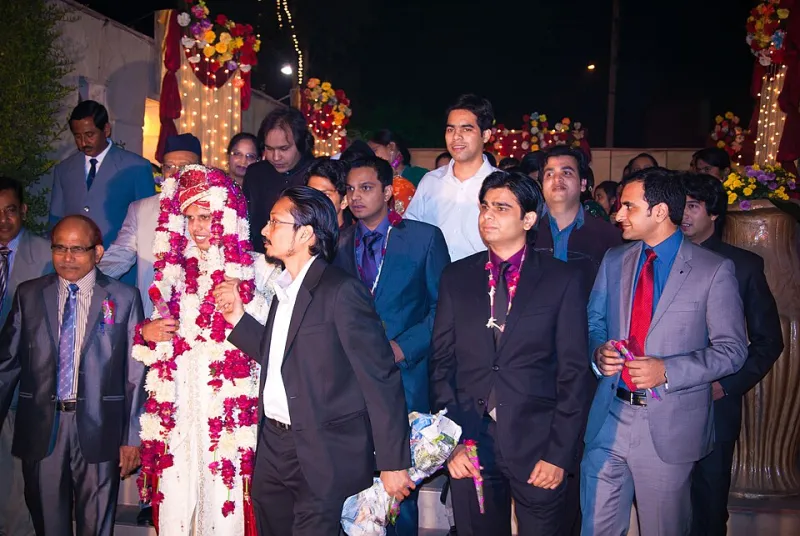
Photo: wedstories.studio, CC BY-SA 2.0, via Wikimedia Commons
So you have been invited to a Pakistani-American wedding. Maybe you are the plus-one. Maybe you are the coworker who said yes before checking the calendar. Either way, you have questions: What do I wear? What do I gift? How do I survive the relative who wants to know my salary, my relationship status, and my thoughts on cilantro? Consider this your Onion PK translation layer for wedding season 2026.
First, Decode the Invite
A Pakistani wedding is less one event than a small festival with a seating chart. The mehndi is usually the loosest night: music, henna, bright colors, and a dance floor that starts polite and ends chaotic. The baraat is the ceremony and procession, often louder and more formal. The walima is the reception, which is where you wear your best outfit and pretend you are not sweating through it.
Not every family does every event, and not every invite includes a plus-one. Read the card carefully. If it says one seat, do not bring a friend. If it says family, ask before assuming the kids are included. Wedding planning in any culture runs on exact counts, and a surprise guest is not the romantic gesture you think it is.
The Outfit Rules Nobody Posts
You do not need to wear a shalwar kameez to fit in, but you do need to think about fabric. A heavy embellished outfit looks great in photos and feels like a sauna by the second hour. Choose breathable fabrics, comfortable shoes, and something you can sit in without holding your breath. If you are borrowing traditional clothes, do a test run at home: sit, stand, walk, hug someone, and eat a samosa. If the outfit fails any of those tests, adjust.
Color is your friend. Jewel tones, deep greens, marigold, royal blue, and rich pinks all work. Avoid all-white unless you know the family well and have confirmed it is fine; in many South Asian weddings, white is not the automatic bridal color it is in the US, but it can still read as a guest who wandered in from a different event. Black is generally okay, though an auntie may ask why you are dressed for a funeral. You can answer, 'I was told there would be dancing,' and move on.
If you wear a dupatta, scarf, or shawl, practice pinning it. A dupatta is not a decoration; it is a small fabric democracy that wants to fall off at the worst possible moment. Bring safety pins. Bring a spare safety pin. Bring one more safety pin for the person who will inevitably ask you for one.
Gifts: Cash Is Not Tacky Here
American wedding registries are not the default at many Pakistani-American weddings. Cash in a nice envelope is common, practical, and deeply appreciated. For a coworker or distant friend, $50 to $100 is a safe lane. For a close friend, the number goes up. Families often pool money for a larger gift, and that is not rude; it is efficient.
Do not bring alcohol unless you have confirmed the family drinks and the venue allows it. Many Pakistani-American weddings are dry or have a separate arrangement. A bottle of wine as a host gift can be thoughtful in some American contexts and awkward in others. When in doubt, go with cash, a heartfelt card, or a gift card to a home goods store. A random candle is fine, but it will not beat an envelope with your name on it.
Food Strategy
Arrive hungry, but not so hungry that you attack the appetizer table. Pakistani weddings usually have a buffet, and the line can move in mysterious ways. Start with a small plate. You can always go back. The biggest rookie mistake is filling up on samosas and pakoras before the biryani arrives.
Biryani is the main event for many guests, but do not ignore the curries, naan, raita, and salad. If you are spice-averse, take small portions of the hot dishes and pair them with rice, raita, or naan. Do not ask for ketchup at the buffet. You can ask for water, extra napkins, and a fork without shame. Dessert is usually gulab jamun, kheer, or something equally sweet. Take one, then decide if you need a second. The answer is often yes.
If you have allergies, ask the hosts or the catering staff early. Nuts, dairy, and gluten show up in places you might not expect. A wedding is not the time to play detective with your immune system.
The Aunty Inquisition
Here is the truth: the aunty who asks when you are getting married is not your enemy. She is a social search engine with a strong opinion about your hair. You do not have to answer every question. You do need a few polite exits.
When asked about marriage: 'I am taking applications, but the vetting process is rigorous.' When asked about your job: 'I work in my field, and I am currently researching the dessert table.' When asked why you are not eating more: 'I am pacing myself. This is a marathon, not a sprint.' When asked about politics: 'I am here for the biryani and the dancing.' Then point at the dance floor and walk toward it.
Compliments are currency. Tell an auntie her outfit is beautiful. Ask her how she knows the couple. Ask what she recommends from the buffet. Most people would rather talk about food than interrogate a stranger, and you have just given them a better topic.
Dance Floor and Exit
You do not need to know the steps. Watch for a minute, copy the person who looks like they are having the most fun, and keep your elbows close. The dance floor is also a great place to escape a conversation. 'I promised someone a dance' is a complete sentence.
Keep your phone charged. Bring a shawl or light jacket for the car ride home. Say goodbye to the hosts if you can find them; if they are surrounded by relatives, a text the next day is fine. And if you leave with a plate of leftovers, a new friend, and a safety pin still attached to your sleeve, you did the wedding right.