Tape Ball Takeover: Why Your Local Parking Lot Might Be the Next Big Sports Venue
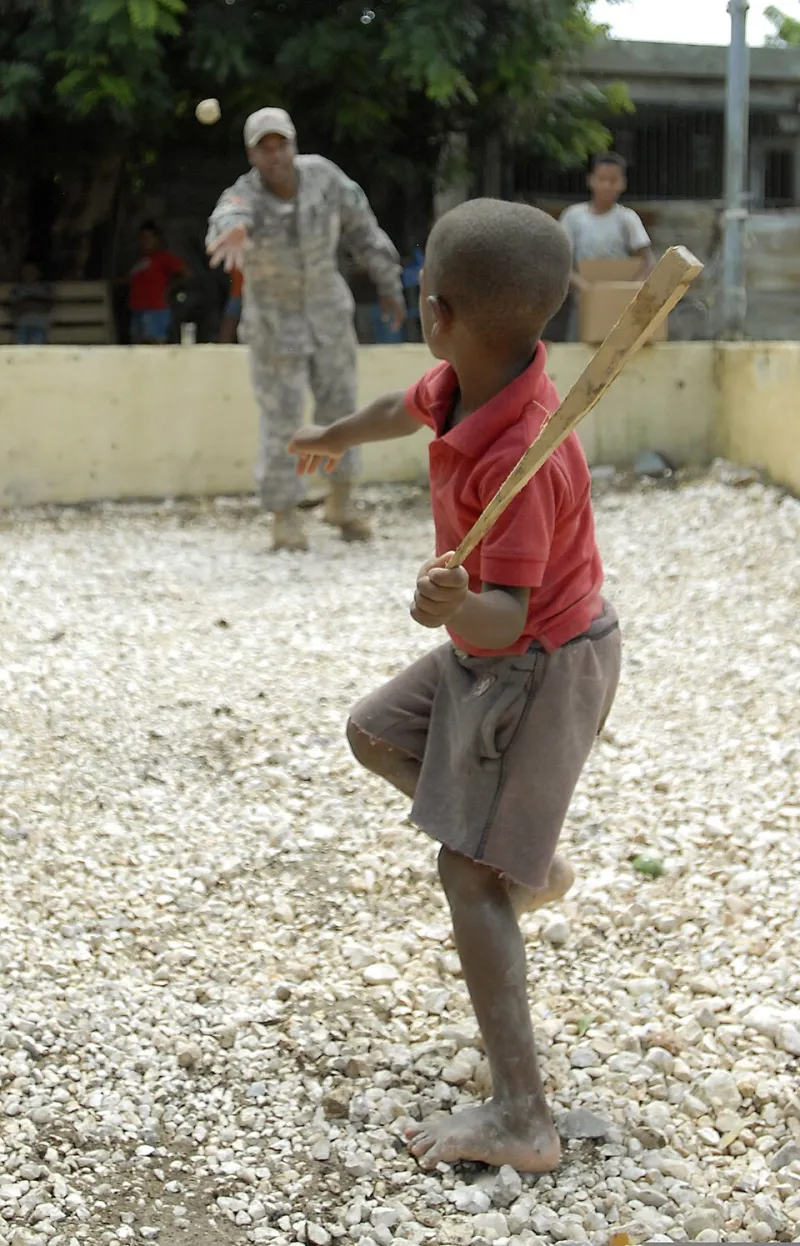
Photo: Sgt. Monte Swift, Public domain, via Wikimedia Commons
If you've driven through certain pockets of Brooklyn, Jackson Heights, or Houston's Mahatma Gandhi District on a Sunday morning, you've probably seen it: grown adults in joggers sprinting between chalk lines drawn on asphalt, wielding what looks like a taped-up broomstick, screaming in a mix of English and Urdu.
Congratulations. You've witnessed America's fastest-growing underground sport: tape-ball cricket.
What Even Is Tape Ball?
For the uninitiated: take a standard tennis ball, wrap one side tightly in electrical tape, and you get a delivery that can swing, skid, and generally ruin a batter's afternoon. No pads, no grass field, no 40-year-old rulebook. Just a flat stretch of concrete, a wooden bat, and usually a parked car serving as the wicketkeeper.
It's the street version of cricket the way stickball is to baseball — stripped down, fast, and fiercely competitive. And it's how millions of Pakistanis grew up playing the game, which is exactly why it made the journey over with them.
From Karachi Streets to the Five Boroughs
The Pakistani diaspora didn't just bring recipes and wedding playlists to America — they brought the entire infrastructure of pickup cricket. Leagues in New York, Chicago, Houston, and the Dallas suburbs now run full seasons, complete with sanctioned rules, hired umpires, and trophies that families photograph like newborns.
The NYC Tape Ball Federation alone sanctions dozens of teams, many of them sponsored by local halal restaurants and taxi base owners — the modern equivalent of the corner-bar sponsorship in a church softball league.
"We used to play in the alley behind my uncle's shop in Karachi," says one league organizer in Queens. "Now my son plays in a parking garage in Long Island City. Same arguments about the umpire. Everything else is different."
The Second-Gen Effect
Here's where it gets interesting for American sports watchers: the newest wave of players isn't immigrants. It's their kids.
Second-generation Pakistani-Americans — along with Indian, Bangladeshi, Caribbean, and, increasingly, American-born players with zero family connection to cricket — are joining leagues in record numbers. Some found the game through their fathers. Others found it through YouTube highlights, MLB players talking about cricket crossovers, or the fact that Major League Cricket now has actual stadiums in Texas and North Carolina.
The appeal isn't hard to figure out. Tape ball is cheap — a bat, a taped ball, done. Games are short. The trash talk is elite. And unlike the $400 travel-soccer industrial complex, nobody's asking a nine-year-old for a recruiting video.
Could Cricket Actually Break Through in the US?
Skeptics have predicted America's cricket awakening for decades and been wrong every time. But the ingredients are finally on the stove: a professional league with real money, a youth pipeline fed by immigrant communities, a massive T20 World Cup hosted on US soil in 2024, and streaming numbers that make executives sit up straight.
Will tape ball replace pickup basketball at the park? Probably not next summer. But fifteen years ago, nobody thought soccer would become the default sport of suburban America's kids either.
The next big American sports obsession might not come from a boardroom. It might come from a parking lot in Jackson Heights, one strip of electrical tape at a time.