Doodh Patti, Meet Your Third Wave: The Pakistani Cafe Boom Taking Over US Blocks
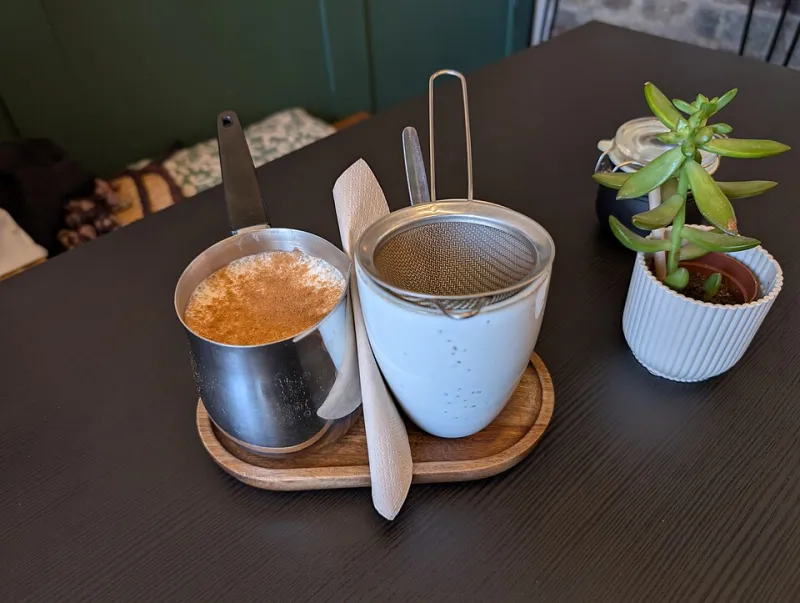
Photo: Andy Li, CC0, via Wikimedia Commons
In Houston, the line starts forming before the afternoon rush. In Chicago, someone is editing a screenplay next to a group of students sharing a plate of pakoras. In Brooklyn, a cafe is hosting an open mic where half the set is in English and half is in Urdu. By late 2026, the Pakistani-American cafe is no longer a niche curiosity. It is a full-on neighborhood institution.
The menu tells the story before you even order. There is doodh patti, strong and milky, next to a single-origin pour-over. There is a cardamom latte, a saffron cold brew, and something called kulfi affogato that sounds like a dare and tastes like dessert. The pastry case might hold croissants and maamoul, or it might hold samosas and cake rusk. Nobody is asking permission to mix things up.
The Menu Is Not Asking Permission
For years, chai in the US was often treated as a novelty: sweet, spicy, maybe served from a cart. Pakistani-American cafes are doing something different. They are treating chai with the same seriousness that third-wave coffee shops treat espresso. They talk about steeping time, milk fat, cardamom ratios, and the difference between a boil and a simmer.
That sounds precious, but it is also practical. A good doodh patti is not complicated. It is tea, milk, sugar, and patience. The upgrade is not about making it fancy. It is about making it consistent, welcoming, and available at 4 p.m. on a Tuesday when you need somewhere to sit that is not your apartment.
The Cafe as Community Living Room
Walk into one of these spots on a weekend and you will see the whole social ecosystem. A group of aunties in the corner dissecting a wedding menu. A college student with three textbooks and one iced latte. A couple on a first date trying to split a bun kebab without making it weird. Someone's uncle holding court about the old country, even though everyone at the table was born in New Jersey.
The events calendar is part of the draw. Open mics. Poetry nights. Study sessions. Board game evenings. A beginner's Urdu conversation circle. These are not random add-ons. They are the reason people stay for three hours and order a second drink. The cafe is doing what a good third place is supposed to do: give people a reason to be together without demanding a big occasion.
Why This Boom Is Happening Now
The timing makes sense. The children of Pakistani immigrants are now old enough to open businesses, and many of them grew up between two food cultures. They know what a proper cup of chai tastes like at home, and they know what an American coffee shop needs to survive. They are not choosing between the two. They are building a room where both can exist.
Social media helped, too. A photogenic cup of chai travels well on Instagram. So does a video of a packed open mic. But the real fuel is more basic: people want places to gather that feel like theirs. The post-pandemic years made that desire louder. Coffee shops are expensive to run, but they have reliable foot traffic. Chai has loyalty. Put them together and you have a business model that can work in Houston's Sugar Land corridor, Chicago's Devon Avenue area, and Brooklyn's Kensington without feeling like a copy-paste franchise.
The Cross-Cultural Test
A good Pakistani cafe does not force a cultural keynote before every latte. It does not make you sit through a lecture on colonialism to order a croissant. The best spots just make room. An American customer comes in for the wifi and leaves curious about the kulfi. A Pakistani regular comes in for the doodh patti and stays because the playlist is good and the chairs are comfortable.
That is a harder balance than it sounds. Too much explanation and the place feels like a museum. Too little and it feels like a generic coffee shop with a few exotic menu items. The cafes that get it right treat their menu as ordinary in the best way. Chai is not a stunt. It is just what is for breakfast.
What to Order First
Start with the doodh patti. If you are a coffee person, get the cardamom latte or the saffron cold brew. If you see kulfi affogato, order it and share it with someone you like. If there is a bun kebab on the menu, do not overthink it. And if you are unsure, ask the person behind the counter what they would drink on a rainy afternoon. That is usually the right answer.
The Pakistani-American cafe boom is not about replacing the coffee shop. It is about expanding what the coffee shop can be. More cardamom, more community, more reasons to linger. The cold brew crowd will survive. They might even learn to ask for a second cup of chai.